

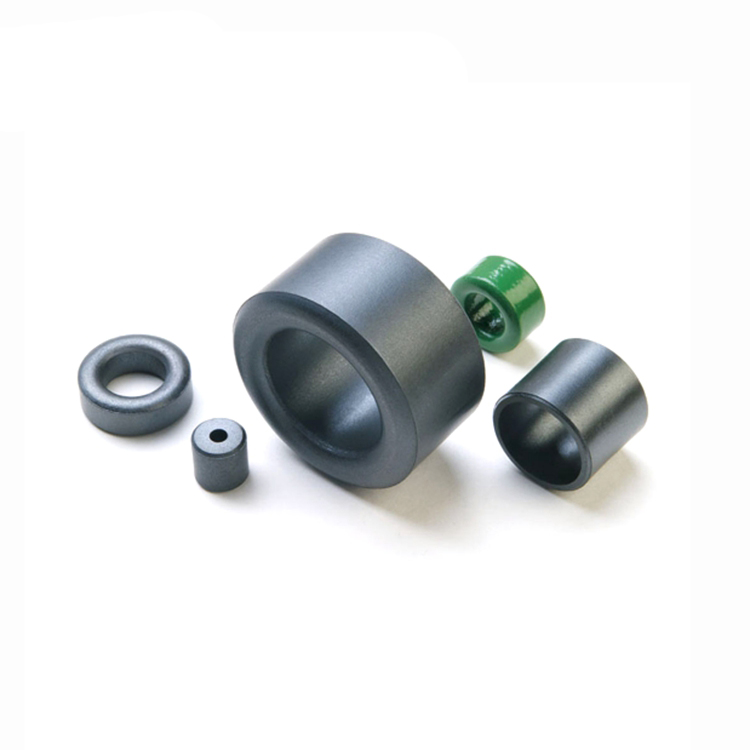

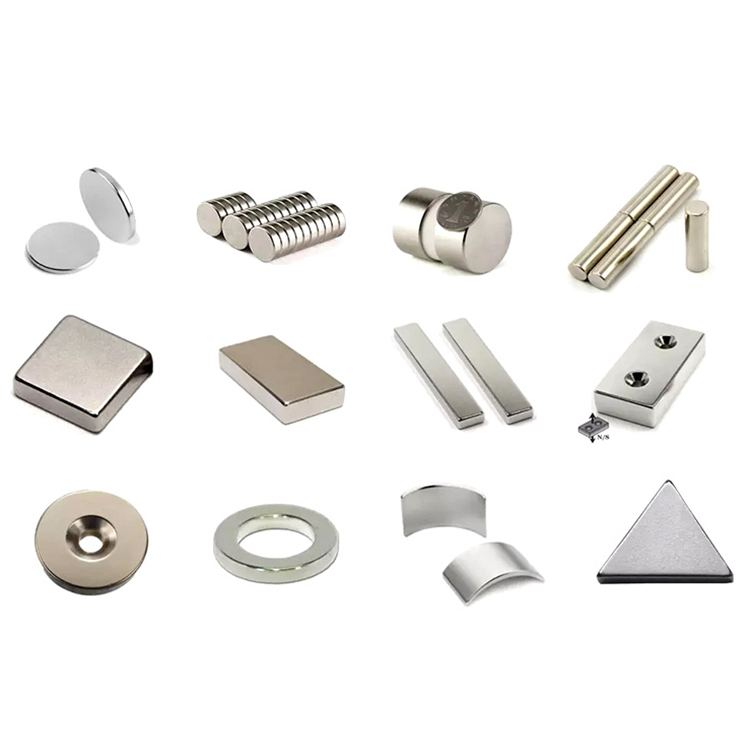
Neodymium magnets are powerful permanent magnets made from rare earth metal alloys.
Neodymium magnets are primarily made from an alloy of neodymium, iron and boron (NdFeB). In addition, they contain small amounts of elements such as praseodymium (Pr), dysprosium (Dy), aluminum (Al) and niobium (Nb). The addition of these elements enhances the material’s properties, such as strength, high temperature resistance, resistance to demagnetization and corrosion.
The preparation of neodymium alloys begins by melting the metal into a vacuum induction furnace. The molten alloy is cooled by strip casting, a rapid cooling technique, to form flake-like materials.These flakes are broken up and placed in a jet mill to be ground into a fine powder.

Sintered magnets
Sintered neodymium magnets are made by heating raw rare earth metal particles in a furnace under vacuum. Elements consisting primarily of neodymium, iron and boron are selected to form magnets of a specified grade. The chemical composition of the magnets is adjusted to determine the magnetic polarization, Curie point, flux density and coercivity.
After melting, the NdFeB (neodymium, iron, boron) mixture is cast into a mold and cooled to form an ingot. The ingot is ground into fine particles and then milled, usually using a jet mill. The fine powder is pressed into a shaped mold. The coil applies magnetic energy while heating and melting the powder.
This forms the neodymium into a dense block. The coil generates magnetism when an electric current is passed through it.
After the crushed magnetic powder is placed in the mold, an external magnetic field is applied to orient it. During the process of pressing the mixture, the direction of the magnetism is fixed. After orientation, the powder is fully compacted.
The resulting magnet is called anisotropic magnet, which means that the direction of magnetism is consistent with the particle structure. The strength of the magnet can be enhanced by maximizing the magnetic orientation in the direction of the magnetic poles.
There are three methods for pressing sintered NdFeB magnets, each of which produces a slightly different final product. Common methods are axial pressing, transverse pressing, and isostatic pressing. Each method represents a specific relationship between the pressing axis and the magnetic orientation axis.
In axial pressing, the pressing axis and the orientation axis are the same. Transverse pressing means the pressing axis is perpendicular to the orientation axis. Finally, applying pressure evenly from all directions is called isostatic pressing. When isostatic pressing a magnet, the magnetic forces are oriented before pressing.
After locking the magnetic orientation, the magnetized material is demagnetized. Since the material is too brittle for practical use, it must be sintered. Sintering is heating the magnetic powder to near the melting point in an oxygen-free environment to fuse the magnetic particles together.
After sintering, the magnet is quenched. The heated material is cooled rapidly to give it greater strength and hardness. After quenching the sintered magnet, it is tempered to cool the magnetic powder.
Once the specified temperature is reached, it is heated again. Rapid cooling strengthens the magnet by reducing the areas of weak magnetism.
Now the magnet can be machined into a suitable, useful shape. Due to the high hardness of the magnet, diamond-coated tools are required. Machining methods include grinding and slicing, laser machining, and electrical discharge machining (EDM).
Bonded Magnets
Bonded NdFeB magnets are rare earth magnets made from NdFeB magnetic powder and a binder. Bonded magnet powder is made by grinding the NdFeB alloy into a powder and then mixing it with a polymer. Bonded magnets are extremely useful not only as finished magnets, but also as components of many other products. Bonded magnets typically contain less neodymium and more iron than other types of magnets.
Bonded magnets can be made by injection molding, extrusion, calendaring, or crimping.
The injection molding process involves injecting a molten thermoplastic compound into a mold. In the mold, the compound cools and solidifies into the appropriate shape. For neodymium magnets, the magnetic powder in this mixture is NdFeB. Magnets can be formed by this process, which works well with assembly and overmolding manufacturing techniques.
The extrusion process involves pushing the mixture through a large screw into a heated barrel. The mixture is pressed into a heated mold and the material is then cut into the appropriate length.
Calendering is a method of making continuous magnetic sheets and is often used for flexible magnets. A powdered mixture of iron powder and elastomer is pushed through a set of hot rollers. These rollers stretch and smooth the strip into a uniform sheet.
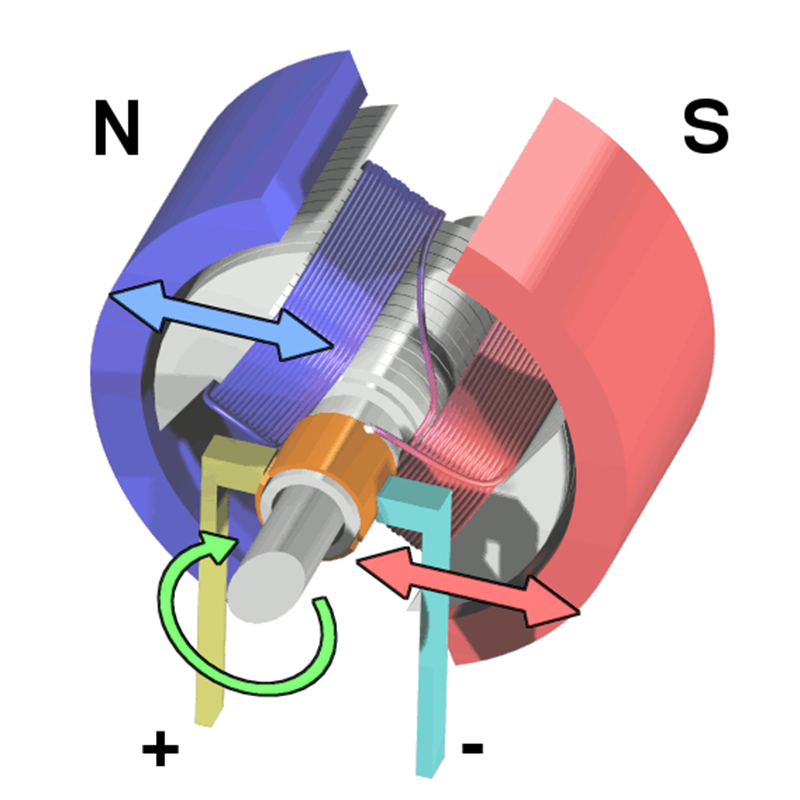
In the press-welded process, the NdFeB magnets are processed through a powder refining process, mixed with plastic material and then press-molded. Press-welded neodymium magnets can be magnetized in any direction and have multi-pole characteristics. They are commonly used in small motors, mobile phones, electronics, automobiles, etc. Other applications include brushless motors, speakers, buzzers, and toys, etc.

Protective Coating
Because neodymium magnets are brittle, they are prone to chipping and breaking. Without a protective coating, the NdFeB matrix is also prone to rapid oxidation. To prevent this, the magnets need to be coated, cleaned, and electroplated to prevent corrosion.
Before the material is re-magnetized, a protective coating needs to be applied to extend the life of the magnet. This is usually a three-layer electroplated coating consisting of nickel, copper, and nickel.
Any coating or electroplating must be done before the sintered magnet reaches saturation (charging). High temperatures can demagnetize magnets, and magnetic fields can interfere with the electroplating process. The most common electroplated coating is a nickel-copper-nickel mixture, but other metals or polytetrafluoroethylene (PTFE) polymers can also be used.
Bonded neodymium magnets are also typically coated before use, usually by electrophoretic coating (“E-coating”) or spraying. For magnets used in extreme temperature applications or corrosive environments, other coatings and methods are used. E-coating is widely used because it can be applied in different applications and has a uniform thickness. Spraying is more suitable for smaller magnets and is not recommended for corrosive environments.