



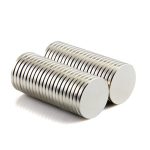
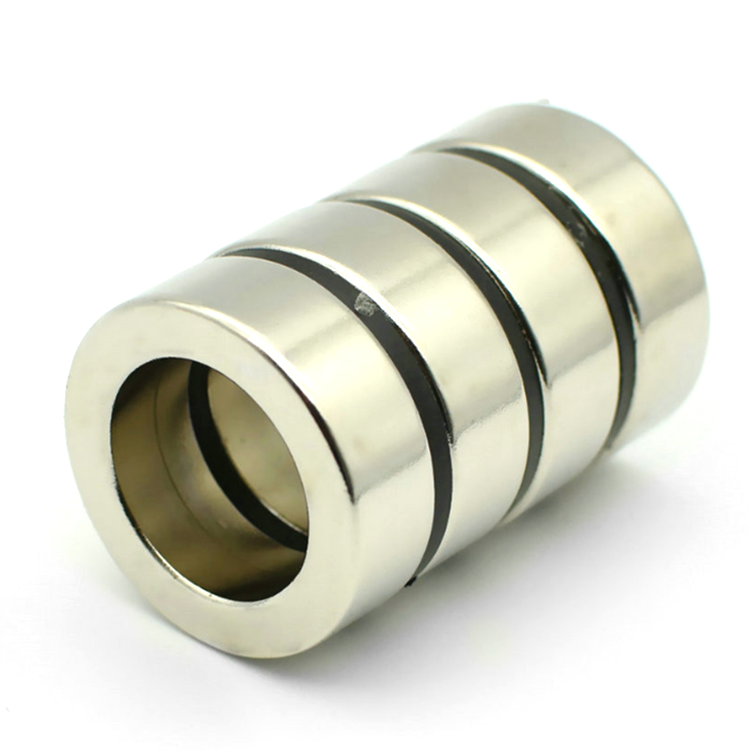
magnets that can sustain their magnetic field over an extended period of time. such as man-made (alnico) and natural (magnetite) magnets. Electromagnets, which require electricity to be magnetic, are another type of magnet in addition to permanent magnets. Hard magnets, often known as permanent magnets, are those that are difficult to magnetize and difficult to lose their magnetic properties. It does not, however, imply that the magnetism will never be lost. The magnetism of the permanent magnet will also diminish or vanish when heated above the Curie temperature or in an environment with a strong reverse magnetic field. Certain magnets are fragile and susceptible to breaking under hot conditions.
Alnico magnets have a maximum working temperature of about 540 °C (1,000 °F), samarium cobalt magnets and ferrites are around 570 °F (about 300 °C), neodymium magnets and soft magnets are around 280 °F (about 140 °C), although the actual value will still vary based on the crystal grain of the material.
Soft magnets make up the majority of the materials used as magnetic conductors and electromagnets. The soft magnet’s polarity fluctuates along with the polarity of the applied magnetic field, whereas the permanent magnet’s polarity remains constant. Iron items may be drawn to them. This quality is known as magnetism.
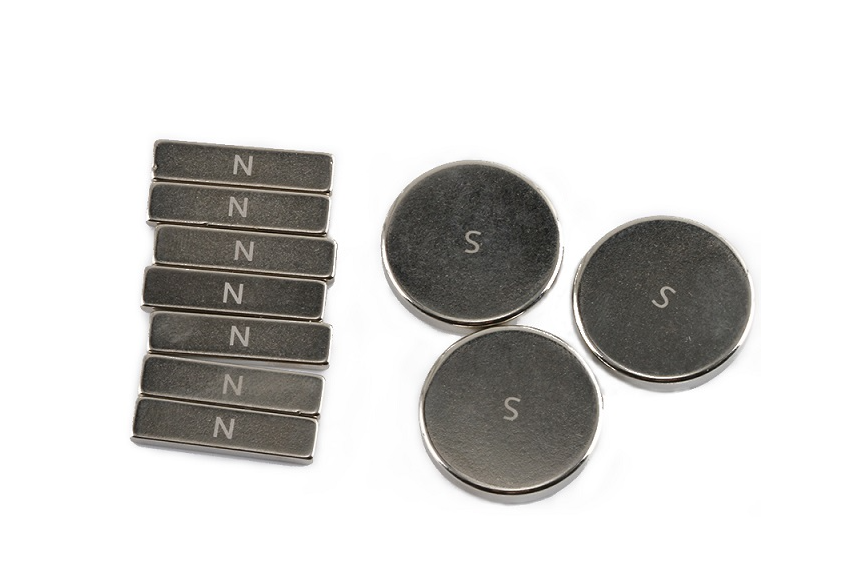
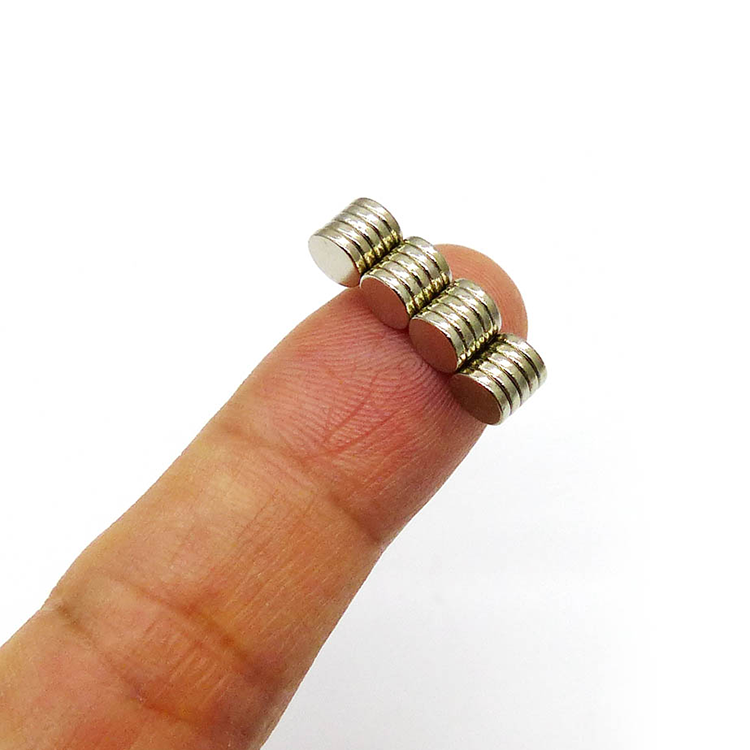
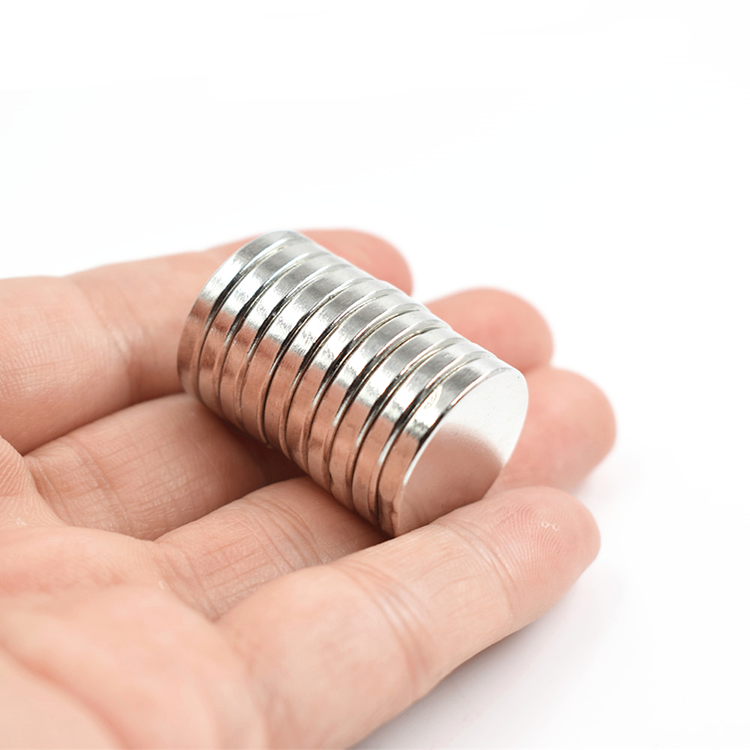
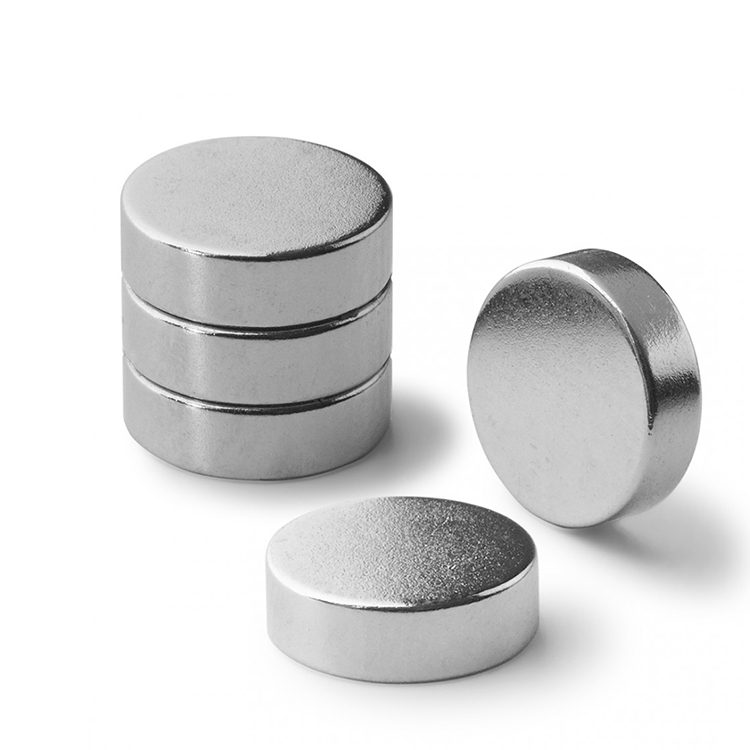
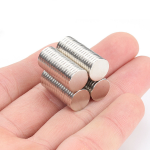
Permanent Neodymium Magnet
In a closed circuit environment, a magnet is magnetized by an external magnetic field until the technology is saturated, at which point the external magnetic field is cancelled. At this point, the magnet’s magnetic induction strength is referred to as remanence. Tesla (T) and Gauss (Gs), which reflect the highest magnetic flux value that the magnet can give, are the units of remanence (Br), where 1Gs=0.0001T. The demagnetization curve demonstrates that this corresponds to an air gap of zero, where the magnet’s magnetic induction strength in the real magnetic circuit is lower than the remanence. The strongest permanent magnet material currently available for Br is NdFeB.
When the magnet is magnetized in the opposite direction after reaching technical saturation, the magnetic induction coercive force (Hcb), measured in ampere/meter (A/m) and Oersted (Oe), or 1Oe79.6A/m The magnetic coercive force (Hcb) is the amount of reverse magnetic field strength necessary for the strength to decrease to zero. However, the impact of the supplied reverse magnetic field and the magnet’s magnetization cancel each other out at this point, even if the magnetization of the magnet is not zero. (There is no external magnetic induction.) The magnet still possesses some magnetic characteristics at this point even if the external magnetic field is cancelled. Neodymium iron boron typically has a coercivity more than 11000 Oe.
Alloy permanent magnet materials, such as rare earth permanent magnet materials (NdFeB Nd2Fe14B), samarium cobalt (SmCo), aluminum nickel cobalt (AlNiCo), and ferrite persistent magnet materials (Ferrite), make up the majority of permanent magnets.
It may be split into three categories based on the various production methods: sintered ferrite, bonded ferrite, and injection molded ferrite. On the basis of the varied orientations of the magnetic crystal, these three processes are classified as isotropic and anisotropic magnets.
Its coercivity is 3-10 times more than that of alnico magnets and its BHmax value is 5-12 times greater than that of ferrite magnets. The force is 5–10 times greater than that of a ferrite magnet and 5–15 times more than that of an alnico magnet. It has very strong magnetic potential and can absorb weights that are 640 times its own weight. Incredible Grade N42 magnetic energy is ten times more powerful than the strongest ceramic magnet and stronger than N40, N38, and N35 combined. Neodymium magnets n52 are the highest grade currently offered on the market. Any letter following the grade refers to the temperature rating of the magnet. The magnet is normal temperature neodymium if there are no letters after the grade.
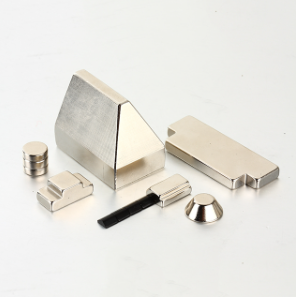
Custom Magnet No. 1
Neodymium reserves are 10–16 times greater than samarium reserves because to the low cost of iron, which serves as the primary raw material for neodymium iron boron magnets. As a result, the price of neodymium is significantly cheaper than that of samarium cobalt magnets.
In comparison to samarium cobalt and alnico magnets, neodymium iron boron magnets have greater mechanical qualities, and they are also simpler to cut, drill, and process into complicated forms.
Neodymium iron boron magnets’ poor temperature performance, significant magnetic loss when working at high temperatures, and low maximum operating temperature are its drawbacks. The average temperature is around 80 degrees Celsius, while magnets with appropriate treatment may function at a maximum temperature of 200 degrees Celsius.
The material’s high neodymium and iron content makes it susceptible to rust, which is a significant vulnerability. Nd:YAG magnets must thus have a surface coating. Nickel (Ni), zinc (Zn), gold (Au), chromium (Cr), epoxy resin (Epoxy), and other materials can be electroplated on it.
NdFeB magnets are presently widely employed in a variety of industries, including aircraft, electronics, electromechanical, instrumentation, and medicine. Additionally, the usage of non-technical domains is expanding, as shown in the use of adsorption magnets, toys, jewelry, and other items.
Neodymium permanent magnets are safe for use in the human body and are often utilized in daily life. Neodymium magnets in particular have an effect on human systems, tissues, organs, disorders, and therapy, according to recent studies. Neodymium magnets offer a lot of promise for use in both diagnostic and therapeutic operations, but their effects have not been properly researched.
Currently, it does not appear to do any harm to the human body, but there are a few things to consider while using it.
Chance of chipping or cracking
Neodymium magnets possess a powerful magnetic field. Even though the magnets are extremely little, if you put them together they will attract each other, jump to each other very quickly, and then bang together. The most frequent reason for magnet breakage is this. It’s conceivable that one, both, or neither magnet is intact.
The magnet’s force may cause the shards created by the magnet’s interaction to fly into people’s eyes at a fast rate of speed. Therefore, when working with several neodymium magnets, we advise that you put on safety glasses. Broken magnets should be handled with the same caution as broken glass because they are sharper.
Risk to children
When handling or playing with neocube balls, children should always have an adult nearby. Children should never play with or near magnets if they could ingest them. The news frequently reports about kids consuming magnets. If more than one magnet is ingested, they will attach to one another through the intestinal wall, clog the digestive tract, and compress it, resulting in significant swelling that might be life-threatening and necessitating surgery. The recommended practice is to keep all neodymium magnets out of children’s reach. Neodymium magnets that are extremely big can break and crush human fingers.
Items that are magnetically sensitive must be kept at a safe distance.
Ten times more powerful than regular magnets are neodymium magnets. Keep all items that could be harmed by magnetism at a safe distance (at least 20 cm) from the magnet. Strong magnets have an impact on a variety of devices, including mechanical clocks, pacemakers, cathode ray tube displays and televisions, credit cards, disks, and other magnetic storage media (such as video cassettes).
a pacemaker effect
The impact of magnets on pacemakers is poorly understood in general. The magnet’s near proximity will have an impact on how the pacemaker functions. Magnets can alter how a pacemaker functions, making them unsafe for pacemaker users and potentially harmful to their health. When the magnet is taken out, the transformation will end.
The majority of pacemakers are constructed of metal, which should be kept away from intense magnetic fields. The pacemaker will stop functioning when exposed to a magnetic field because of the magnetic field. During emergency work, neodymium magnet advantages will have a negative effect on patients and result in avoidable casualties. As a result, it is advised that you avoid using magnets near the pacemaker.
المنتجات ذات الصلة