




مقدمة
Neodymium magnets, renowned for their remarkable strength and versatility, have become indispensable components in various industries and applications. In this article, we delve into the key features and properties of strong round

, exploring their composition, magnetic strength, durability, applications, handling, and safety considerations.
التركيب والهيكل
Neodymium magnets, often referred to as neodymium-iron-boron (NdFeB) magnets, are engineered marvels composed of a precise blend of rare-earth elements, iron, and boron. This unique alloy formulation, coupled with a distinct crystalline structure, endows strong round neodymium magnets with their extraordinary magnetic properties.
At the heart of neodymium magnets lies neodymium, a rare-earth element known for its powerful magnetic properties. Neodymium is combined with iron (Fe) and boron (B) to form a crystalline structure that maximizes the alignment of magnetic domains. This alignment is crucial for generating the strong magnetic field characteristic of neodymium magnets.
The crystalline structure of neodymium magnets is often described as tetragonal or hexagonal, depending on the specific manufacturing process and alloy composition. This structure enables strong round neodymium magnets to exhibit high coercivity, meaning they can withstand demagnetization forces and maintain their magnetic properties even in challenging environments.
In addition to neodymium, iron, and boron, neodymium magnets may also contain trace amounts of other elements such as dysprosium or praseodymium. These elements are added to enhance the magnetic properties of the alloy, improve temperature stability, and reduce the risk of corrosion.
The manufacturing process plays a crucial role in shaping the final composition and structure of strong round neodymium magnets. During production, raw materials are melted and cast into ingots, which are then crushed into fine powder. The powder is subjected to a process called sintering, where it is heated at high temperatures to fuse the particles together and form a solid magnet. This process allows for precise control over the composition and microstructure of the magnet, ensuring consistent performance and reliability.
القوة المغناطيسية
The defining characteristic of neodymium magnets is their extraordinary magnetic strength, which far surpasses that of traditional magnet materials such as ferrite or alnico. This remarkable strength stems from the unique composition and crystalline structure of neodymium magnets, as well as their manufacturing process.
At the core of the exceptional magnetic strength of neodymium magnets lies the alignment of magnetic domains within their crystalline structure. Strong round neodymium magnets are composed of small magnetic domains, each containing countless magnetic moments aligned in a specific direction. These domains align themselves spontaneously when the material is magnetized, creating a strong overall magnetic field.
One of the key factors contributing to the magnetic strength of neodymium magnets is the presence of neodymium, a rare-earth element renowned for its powerful magnetic properties. Neodymium atoms contribute significantly to the overall magnetization of the material, aligning their magnetic moments in the same direction to reinforce the magnetic field.
In addition to neodymium, the presence of iron and boron in the alloy further enhances the magnetic strength of neodymium magnets. Iron, being a ferromagnetic material, contributes to the overall magnetization of the alloy, while boron acts as a stabilizing agent, helping to maintain the alignment of magnetic domains.
Durability and Stability
Strong round neodymium magnets are renowned not only for their exceptional magnetic strength but also for their remarkable durability and stability. These magnets exhibit robust resistance to demagnetization and corrosion, making them highly reliable components in a wide range of applications.
One of the key factors contributing to the durability of neodymium magnets is their resistance to demagnetization. Despite their strong magnetic field, neodymium magnets possess high coercivity, meaning they can withstand external magnetic fields and mechanical shocks without losing their magnetic properties. This resistance to demagnetization ensures that strong round neodymium magnets maintain their magnetic strength and performance over time, even in demanding operating conditions.
Moreover, neodymium magnets are highly resistant to corrosion and oxidation, thanks to the protective coatings applied during the manufacturing process. Common coatings used to protect neodymium magnets include nickel, zinc, and epoxy resin, which provide a barrier against moisture, chemicals, and environmental contaminants. These coatings not only enhance the durability of strong round neodymium magnets but also ensure long-term stability and reliability in a variety of environments.
However, it is important to note that neodymium magnets are sensitive to temperature variations, which can affect their magnetic properties. At high temperatures, strong round neodymium magnets may experience irreversible loss of magnetic strength or even complete demagnetization. Therefore, it is essential to operate neodymium magnets within their specified temperature limits to prevent thermal damage and maintain optimal performance.
In addition to temperature, exposure to mechanical stress and demagnetizing fields can also impact the durability and stability of neodymium magnets. Care should be taken to avoid subjecting these magnets to excessive mechanical shock or vibration, as well as to minimize exposure to strong demagnetizing fields, which can cause partial or complete loss of magnetization.
Despite these considerations, strong round neodymium magnets offer excellent durability and stability in a wide range of applications. Their resistance to demagnetization, corrosion, and oxidation, coupled with protective coatings and proper handling, ensures long-term reliability and performance in demanding environments. Whether used in motors, sensors, magnetic bearings, or magnetic resonance imaging (MRI) machines, neodymium magnets continue to demonstrate their versatility and reliability across various industries and applications.
Shape and Applications
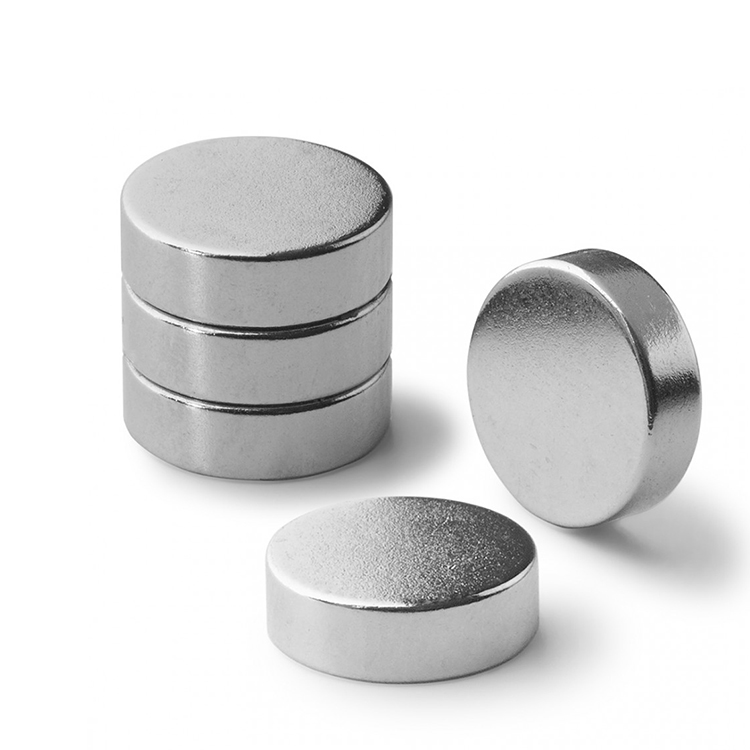
The shape of neodymium magnets plays a significant role in their versatility and suitability for various applications. While strong round neodymium magnets are available in a variety of shapes, including blocks, discs, and rings, the round shape, in particular, offers unique advantages in certain applications.
The round shape of neodymium magnets provides uniform magnetic flux distribution and efficient magnetic field coverage, making them ideal for applications where a concentrated magnetic force is required. Their compact size and symmetrical design allow for precise positioning and alignment, maximizing their effectiveness in magnetic systems and devices.
One of the primary applications of strong round neodymium magnets is in magnetic assemblies and couplings. These magnets are used to create magnetic circuits that transmit force or motion between components without physical contact, allowing for smooth and efficient operation in various mechanical systems. Examples include magnetic clutches and brakes, magnetic couplings for pumps and motors, and magnetic levitation systems.
In addition to magnetic assemblies, strong round neodymium magnets find extensive use in sensors and actuators. Their high magnetic strength and uniform magnetic field make them ideal for sensing and controlling the movement of mechanical components in devices such as position sensors, proximity sensors, and linear actuators. Neodymium magnets are also used in magnetic encoders and Hall effect sensors for precise measurement and detection applications.
Furthermore, the round shape of neodymium magnets lends itself well to applications requiring magnetic attachment or fastening. These magnets are commonly used in magnetic closures, latches, and clasps for doors, cabinets, and jewelry. Their strong magnetic force ensures secure closure and easy release, making them popular choices for consumer products and industrial applications alike.
Handling and Safety
Proper handling and safety precautions are essential when working with strong round neodymium magnets due to their powerful magnetic force. Care should be taken to avoid trapping fingers or skin between magnets, as their strong attraction can cause injury. Additionally, neodymium magnets should be stored away from electronic devices, credit cards, and pacemakers, as they can interfere with their operation.
الخاتمة
Strong round neodymium magnets have revolutionized industries and technologies with their exceptional strength and versatility. Their unique composition, magnetic strength, durability, and round shape make them ideal for a wide range of applications, from consumer electronics to industrial machinery. However, it is crucial to handle these magnets with care and adhere to safety guidelines to prevent accidents and injuries. As technology continues to advance, neodymium magnets are poised to play a central role in shaping the future of innovation and progress across various sectors.