



Rare Earth Ndfeb Magnets
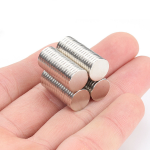
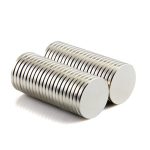
Rare earth ndfeb magnets, often referred to as NdFeB magnets (short for Neodymium Iron Boron), are a type of rare-earth magnet. They are known for their exceptional strength and are commonly used in various applications such as electric motors, hard disk drives, magnetic resonance imaging (MRI) machines, and magnetic fasteners in consumer electronics.
These rare earth ndfeb magnets are made from an alloy of neodymium, iron, and boron. They possess the highest magnetic energy density of any type of magnet commercially available today. Their strength allows them to be relatively small in size while still providing strong magnetic fields, making them extremely versatile in applications where space is a concern.
However, neodymium rare earth ndfeb magnets are also brittle and can be easily damaged if not handled properly. They are also prone to corrosion, so they are often coated with materials like nickel or epoxy to protect them from environmental factors.
Overall, neodymium rare earth ndfeb magnets are crucial components in various industries due to their exceptional magnetic properties, but their handling and storage require careful consideration to maintain their integrity and performance.
Sintered NdFeB permanent rare earth ndfeb magnets are produced using the powder metallurgy method. From material preparation to finished product delivery, there are generally more than a dozen process steps, including several inspections and analyzes at different stages.
The entire production process is a systematic project with interlocking links. Generally, we call the process of producing magnet blanks the front-end production link, and the process of processing the blanks into final products is called the back-end processing link. Magnetic material manufacturers are mainly divided into two categories, one is a manufacturer that has both front-end production and back-end processing, and the other is a processing manufacturer that focuses on back-end processing.

01 Preparing materials
There is a saying that “good medicinal materials make good medicine”. This sentence is very applicable to the production of sintered NdFeB magnets. Good raw materials are the basis for producing high-quality magnetic materials. When manufacturers select raw materials, they generally purchase them according to the magnet performance requirements and the corresponding national standards. Before smelting, the raw materials are cut and surface treated.
02 Smelting
Smelting is the first process for sintered NdFeB permanent rare earth ndfeb magnets to enter the production process rare earth ndfeb magnets. The raw materials are hot-melted in the smelting furnace and cooled to form alloy strips. This process requires the furnace temperature to reach about 1,300 degrees and lasts more than four hours to complete.
03 Hydrogen Breaking+04 Jet Mill
The two process steps of hydrogen crushing and jet mill are collectively called powder making, which is the process of crushing the smelted alloy strips and making magnetic powder. In order to obtain a well-oriented magnet, the powder particles are required to be small in size (3-4 μm) and have a concentrated size distribution, and the powder particles are spherical or approximately spherical.


05 Pressing
The crushed magnetic powder is loaded into a mold, an external magnetic field is applied for orientation, and the powder is pressed after orientation. Powder magnetic field orientation is one of the key process technologies for producing high-performance sintered NdFeB rare earth ndfeb rare earth ndfeb magnets. In the molding process, there are currently three methods commonly used in the industry: molding, molding plus cold isostatic pressing, and rubber mold isostatic pressing. Under the same neodymium content, rubber mold isostatic pressing can obtain greater magnetic energy. product.

06 Heat treatment
After pressing, the relative density of the magnet compact is relatively high. In order to make the magnet have high permanent magnetic properties, the compact needs to be heated to a temperature below the melting point of the basic phase of the powder and heat treated for a period of time. This process is also called sintering. After high-temperature quenching, it also needs to be tempered at a certain temperature to optimize the structure and obtain the best magnetic properties. (Tempering refers to cooling the sintered magnetic powder blank to a certain temperature and then heating it again)

07 machining
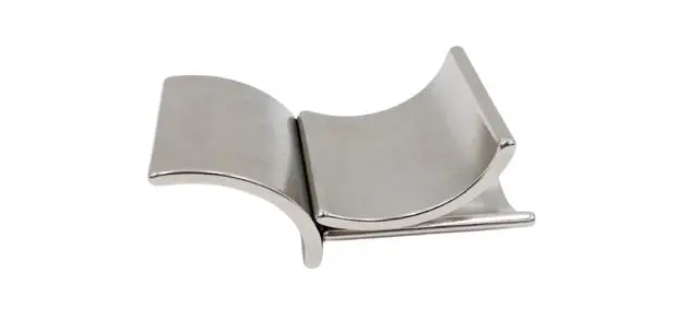
Due to the characteristics and technical limitations of the magnetic field orientation forming process, it is difficult for sintered magnets to directly achieve the shape and size accuracy for practical applications at one time. Many finished magnets are small in size and complex in shape rare earth ndfeb magnets, and can only be processed from blank magnets of a certain shape. Sintered NdFeB material is hard and brittle, and general machining can only carry out cutting, drilling, grinding and rolling.
Considering the cost of raw materials and labor, Japanese and European and American companies mostly choose near-net forming technology rare earth ndfeb magnets, supplemented by subsequent mechanical processing;
Chinese companies produce a wide range of sintered NdFeB products, mainly using a comprehensive production process that combines rough magnets with post-processing, and fully learn from The technological advantages of ceramic and crystal processing bring the mechanical processing level of rare earth permanent magnets to the extreme. With the increase in raw material cost and labor cost pressure, near-net forming and automatic forming technology are developing rapidly in our country.

08 Grain boundary diffusion
The rare earth elements dysprosium and terbium can greatly improve the coercivity and temperature stability of the material. For sintered NdFeB materials that require higher coercivity and operating temperature, dysprosium and terbium often need to be added, but the prices of these two elements are very high. Very high, which will cause the rare earth ndfeb magnets production cost to increase sharply. Currently, grain boundary diffusion technology is commonly used in the industry to reduce the amount of heavy rare earth elements added.

09 Surface treatment
Sintered NdFeB is a powder material with very strong chemical activity. There are tiny pores and cavities inside, which are easily corroded and oxidized in the air. Over time, the magnetic properties will be attenuated or even lost, so strict surface inspection must be carried out before use. Anti-corrosion treatment. At present, the anti-corrosion treatment of NdFeB generally adopts electroplating, chemical plating, electrophoresis, phosphating and other methods. Electroplating, as a mature metal surface treatment method, is widely used.
10 magnetization
Magnetization is a key step for sintered NdFeB permanent magnets to obtain magnetism. The magnetizer is a tool for magnetizing magnetic materials or magnetic devices. It applies a magnetic field to the magnetized NdFeB magnets. If the magnetized magnetic field cannot reach the technical saturation magnetic field, the residual magnetism Br and coercive force Hcj of the permanent magnet will not reach the expected values. In addition to ordinary single-pole magnetization, sintered NdFeB can also be multi-pole magnetized according to actual needs, that is, after magnetization, multiple N and S poles can appear on a plane.

11 Packing and shipping
Packaging and shipping is the last step before the magnet leaves the factory. The magnet manufacturer can package according to the purchaser’s requirements. If the purchaser has special packaging requirements, he or she can inform the supplier in advance. Sintered NdFeB permanent magnets have strong magnetism, so domestic transportation generally uses land transportation rare earth ndfeb magnets. For exports overseas, they can be transported by air after special magnetic isolation packaging and inspection and appraisal by professional institutions.
Quality Inspection
Quality monitoring during the production process of sintered NdFeB permanent magnets and quality testing of final products should include the items listed in the table below, but not every item must be tested. Purchasing personnel can negotiate with the manufacturer for the required testing based on actual needs. project.
Sintered neodymium-iron-boron (NdFeB) permanent rare earth ndfeb magnets are produced through a process called powder metallurgy. Here’s a simplified overview of the steps involved in producing sintered NdFeB magnets:
Raw Material Preparation: The process begins with the preparation of raw materials, which include neodymium, iron, boron, and other elements such as dysprosium and praseodymium for enhancing magnet properties. These materials are typically in the form of powders or flakes.
Mixing: The powders of neodymium, iron, boron, and other additives are thoroughly mixed together in precise proportions to achieve the desired magnetic properties. This mixing process ensures uniform distribution of the elements throughout the magnet material.
Pressing (Compaction): The mixed powder is then compacted under high pressure into the desired shape using a hydraulic press or die press. This process forms a “green compact” with the approximate shape of the final magnet.
Sintering: The green compacts are then subjected to high temperatures in a controlled atmosphere in a process called sintering. During sintering, the compacted powder particles bond together, forming a solid and dense magnet structure rare earth ndfeb magnets. The temperature and time of sintering are critical factors that determine the final magnetic properties of the material.
Machining (Optional): In some cases, the sintered magnets may undergo additional machining processes such as grinding, slicing, or cutting to achieve the desired dimensions and surface finish rare earth ndfeb magnets.
Surface Treatment: After machining, the magnets may undergo surface treatment processes to improve their corrosion resistance and durability. Common surface treatments include nickel plating, epoxy coating, or other protective coatings.
Magnetization: Once the magnets are formed and treated, they are magnetized by subjecting them to a strong magnetic field. This process aligns the magnetic domains within the material, enhancing its magnetic properties.
Quality Control: Throughout the manufacturing process, quality control measures are implemented to ensure that the magnets meet the required specifications for magnetic strength, dimensions, and other properties.