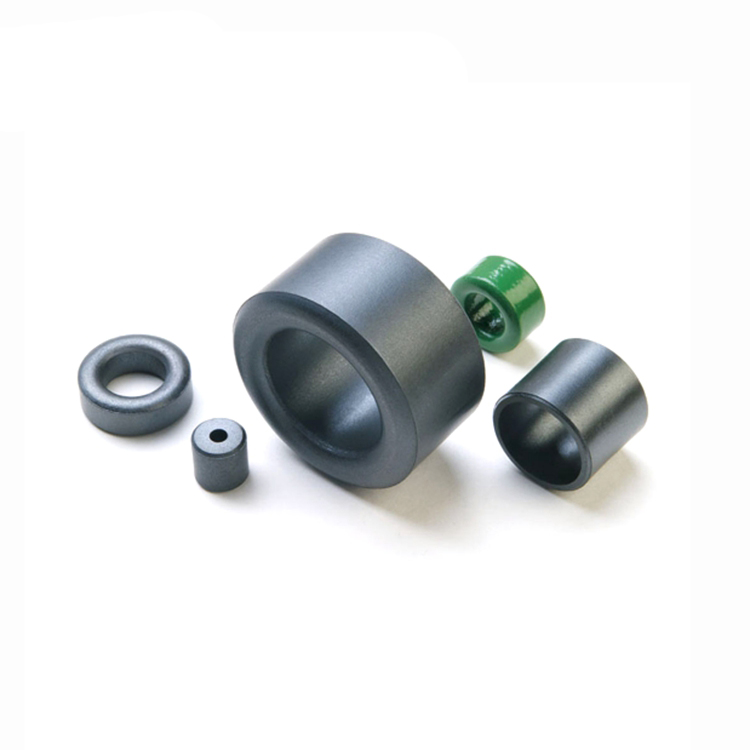
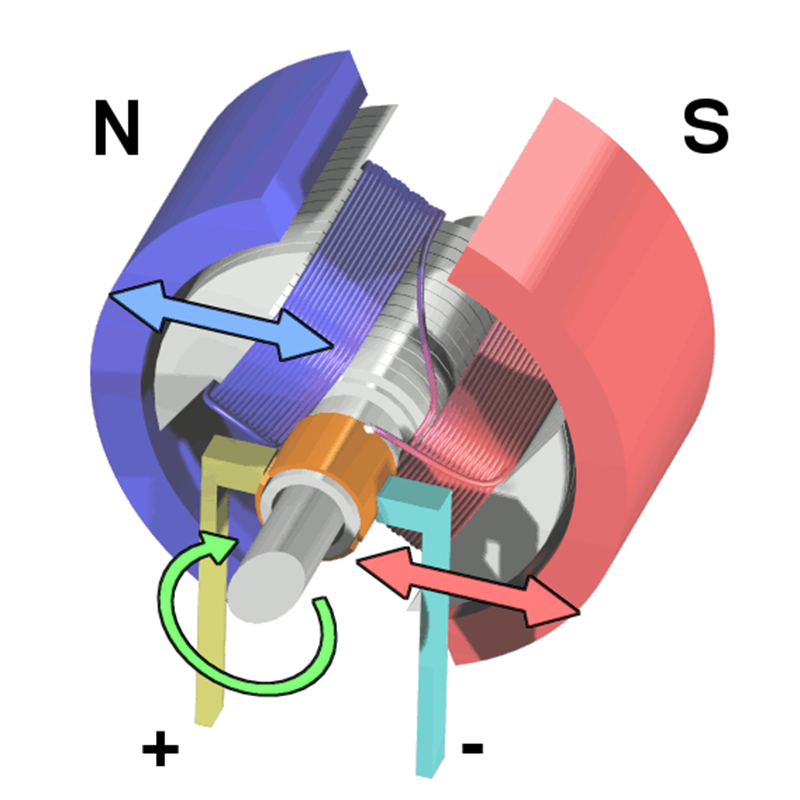
Ferrite is made up of various oxidesprimarily of ferric ions, and exhibits ferrimagnetism or antiferromagnetism. primarily consists of two types of magnets: soft magnets and strong magnets. Soft magnets include manganese zinc ferrite, nickel zinc ferrite, and manganese zinc ferrite. It is very suitable to produce high frequency electromagnetism components because the relative permeability of ferrite can approach thousands, the resistivity can reach up to 1011 times that of metal, and the eddy-current loss is minimal. The drawbacks include poor milling performance, poor thermal stability, and low saturation flux density.Applications of Ferrite Soft Magnet: Because of its feeble remanent magnetization and ease of degaussing, ferrite soft magnets are ideal for use in fields that require remagnetization. such as an antenna, a recorder, a memory cell, and some high frequency components like an alternating current generator, an inductance coil, a transformer, a switch, etc.Hard magnet:The persistent magnetization is excellent for creating permanent magnets because it is powerful and difficult to degauss. It is typically used in permanent-magnet meters, speakers, microphones, TVs, motors, etc.
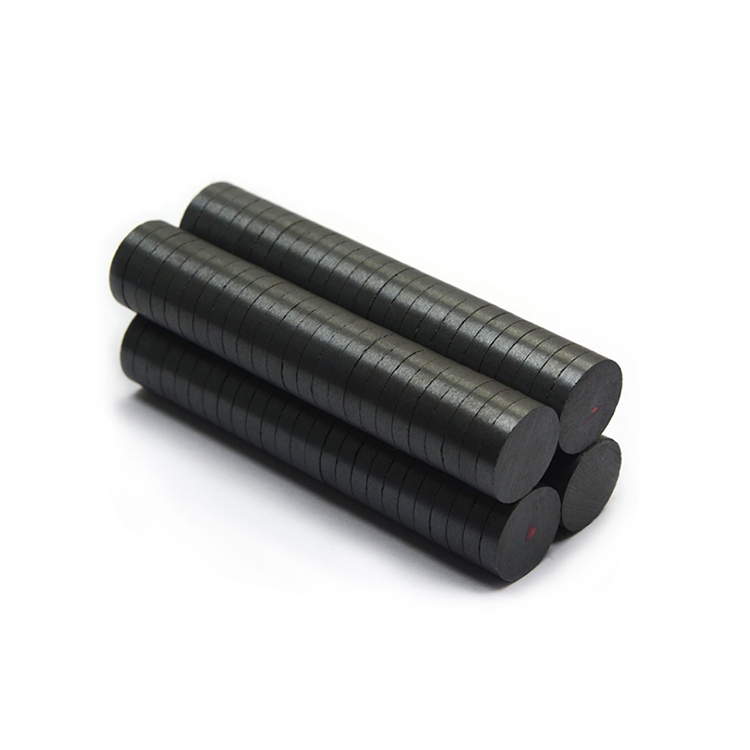
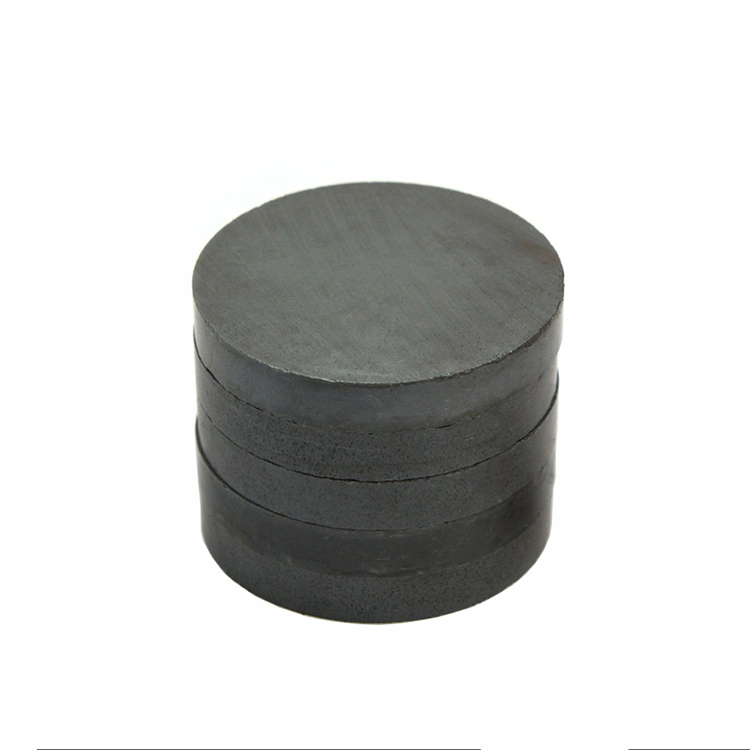
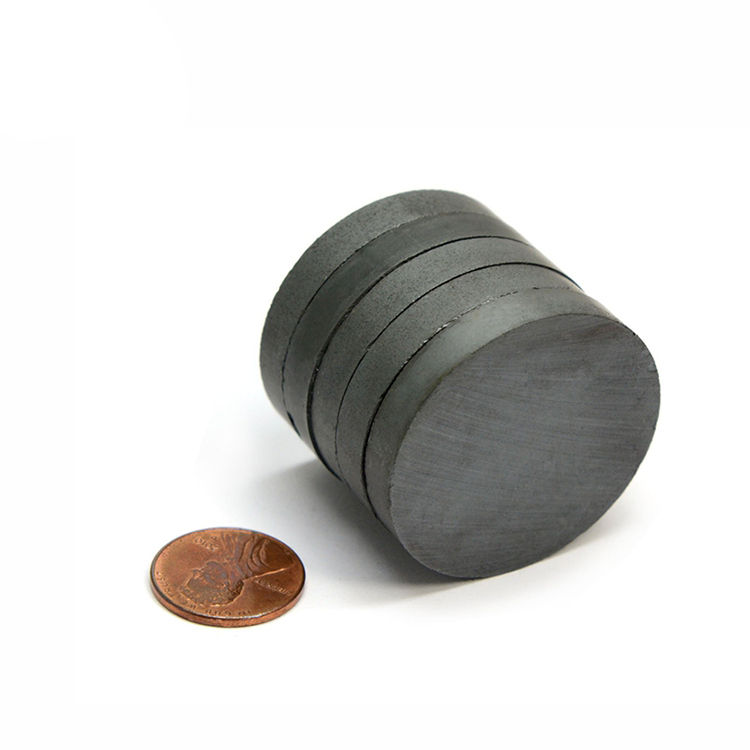
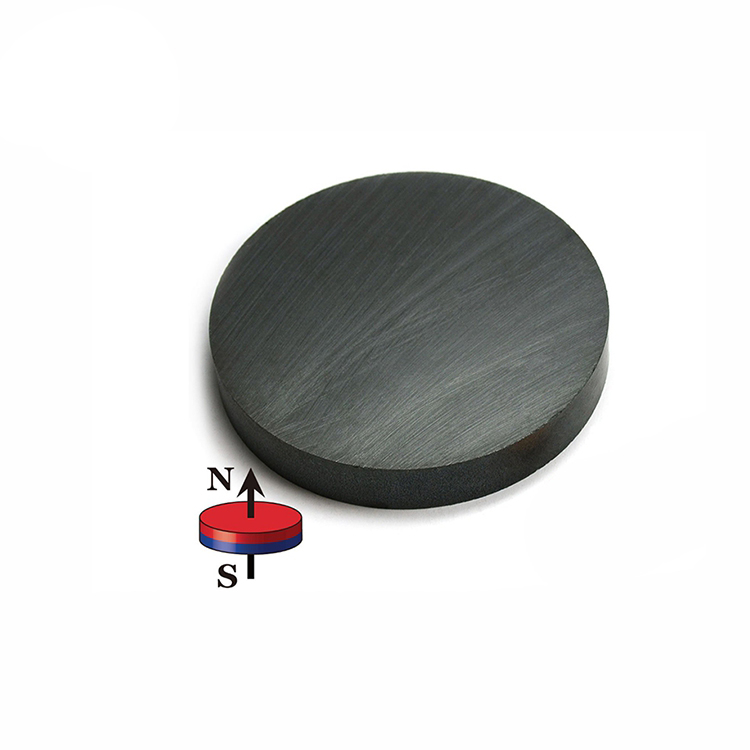
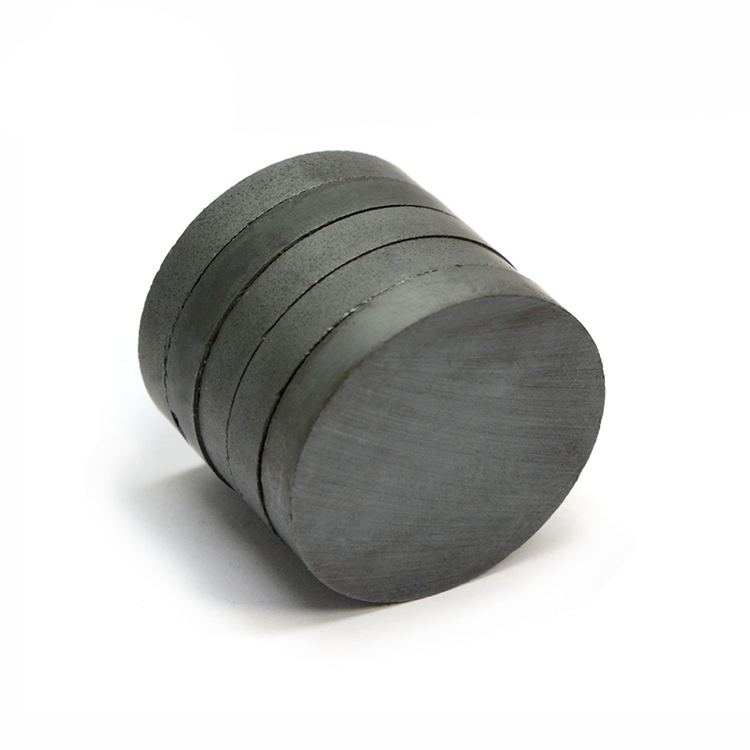
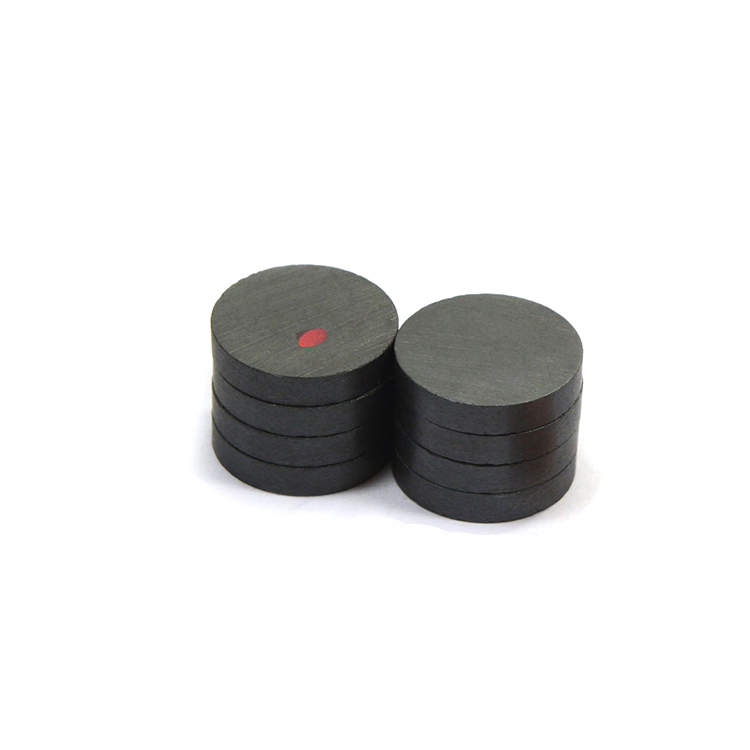
See our Rods area for tubular Ferrite magnets. These circular disc magnets are simple to install in bored openings. “Diameter x Height” measurements are used to determine the size of disc magnets. The plates are magnetic throughout their width from top to bottom.
Ferrite magnets have a high coercivity and are inexpensive, making them suitable for a variety of uses. Additionally, they are easily machined into a variety of forms and sizes using diamond tooling; conventional drills and wire spark erosion methods are ineffective. Although ferrite has exceptional resilience to demagnetization and corrosion, handling the product requires caution due to its fragility.
Ferrite magnets are perfect for use in electrical devices because they can withstand temperatures of up to +250 C. Low temps, such as -10 to -20 deg C, may cause ferrite to exhibit a decreased pull force. (the temperature and the degree of weakening depends on the magnet shape and is application specific; for most uses this effect does not happen as the magnets never get that cold).
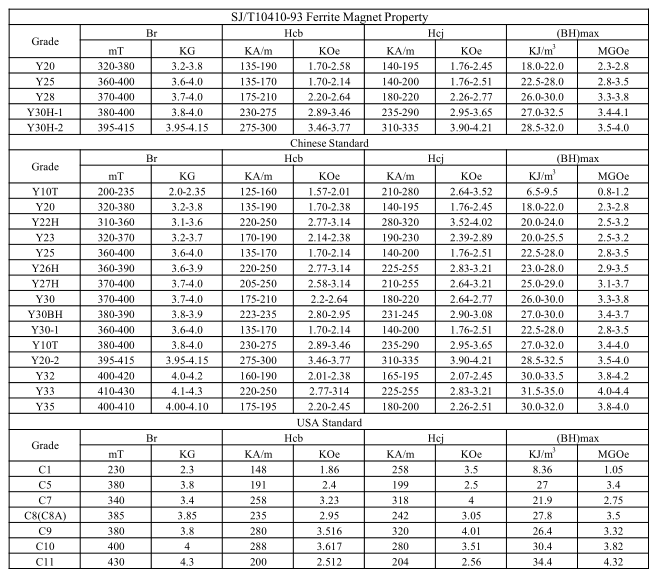
What does Y35 represent? According to the Chinese Standard SJ285-77, the quality of the magnet substance used for ferrite magnets is Y35. We also adhere to this general norm in China. The chart Physical magnet data contains the precise physical numbers. The physical characteristics of ferrite magnets are subject to a number of standards. SJ285-77 Chinese Standard U.S. Industry Standard DIN IEC 404-8-1 of the International Electrotechnical Commission Table displaying actual magnet data and the quality of ferrite magnets The specified value spectrums are where norms diverge the most.
Magnets of various specifications cannot therefore be compared evenly. Our magnets are compatible with the SJ-285-77’s Standard Y35. This standard and C5 of the US Industry Standard or HF26/18 of DIN IEC 404-8-1 are somewhat comparable. In Europe, the DIN IEC Standard is widely used. The minimal energy product level in kJ/m3 and the coercive field intensity, iHc, in kA/m, are simplified to form the classification number. For example, HF24/16: (BxH)max = 24.0–25.5 kJ/m3 / iHc = 160–180 kA/m When we casually refer to a magnet’s “power,” we typically mean either the binding force when the magnet is in close proximity to a metal plate or the enticing force when the magnet is separated from the iron (or another magnet) by a certain distance.
The following elements are equally significant in determining the force as the magnetic substance used: Dimensions of the magnet Magnet’s shape size and shape of the magnet (e.g. the ratio of the diameter to the height of a disc magnet) Combination with other materials, such as whether the magnet is “free-standing” or affixed on a metal object or contained in a metal container.
DIY tasks frequently involve the use of ferrite magnets.
in a variety of shapes. When strength in relation to dimensions is not that essential, choose ferrite magnets.
both for use inside and outside. They are resistant to temps as high as 250 °C and as low as -40 °C.
Magnets are not games, so please keep that in mind. Due to the possibility of choking, magnets should always be kept out of the reach of young infants.
Ferrite magnets are delicate because they lack a shielding covering. Avoid being knocked around. Use only instruments made specifically for working with magnets.
Never store a magnet near to electrical devices like pacemakers, hearing aids, laptops, loudspeakers, mobile phones, etc.
Technology Advantage: Thanks to our cutting-edge R&D facility, quality control team, and skilled machine operators, we are able to outperform our rivals in terms of product quality and consistency.
Delivery Advantage: Because of more adaptable machine process management, the lead time must be 25 days shorter than the industry norm.
Price Advantage: Thanks to an outstanding and effective management system, the price is 5–10% lower than the industry norm.
Application: Strong Ferrite Magnets are extensively used in a variety of applications, including magnetic separation, magnetic hooks, magnetic holders, magnetic chucks, motors, sensors, mics, wind turbines, wind generators, printers, switchboards, loudspeakers, wind turbines, and VCMs in hard disk drives.
give our customers Ferrite Disc Magnet. Strontium ferrite disc, or SrFe12O19 (SrO6Fe2O3), is used in the electrical, telecommunications, recording, and microwave industries as well as in magneto-optic and recording media.[4]. BaFe12O19 (BaO6Fe2O3), also known as barium ferrite, is a typical substance used in permanent magnet uses. Strong clay disc magnets made of barium ferrites are typically resilient to moisture and corrosion-resistant. They are used as a material for magnetic writing, such as on magnetic stripe cards, and in products like loudspeaker magnets. Cobalt ferrite, also known as CoFe2O4 (CoOFe2O3), is a type of magnetic recording medium. Dealing In Large Ferrite Disc, Dia Black Disc, And Ferrite Circular Disc Magnets. Are you curious about this product? Get the Seller’s Most Recent Price Call the vendor
The initial ferrite magnets typically went by titles like Fer 3 or Feroba 3. It is no longer used as a brand name. Then, ferrite was given names that began with the character “C,” such as C5 and C8. Although this is still in use in the US and the UK, there are only a few categories listed. Since China (where our manufacturing plant is located) produces the majority of ceramic hard ferrite magnets, Chinese nomenclature has taken over and is widely used in the UK and Europe, with increased acceptance in the USA as well (the grades commence with the letter “Y”).
Feroba 3 and Fer 3 are now referred to as Y30H-1. Another name for ferrite C8 is Y30H-1.
Y30 is the new name for Fer 2 and Feroba 2. Another name for ferrite C5 is Y30.
The C names or the more recent Y names are used to identify the majority of ferrite magnets. There are other terms for ferrite grades, such as HF26/18 (which is Y30), but these are European designations and are not frequently used outside of Europe. To meet your size needs, we can offer almost any grade of ferrite permanent magnet. The majority of ferrite magnets are anisotropic (they have a favored orientation of magnetization locked within their structure, enabling superior magnetic performance); however, there are some isotropic versions as well, such as C1, Y10T, and HF8/22, which have lower performance.
There is a framework to the Chinese ferrite magnet nomenclature scheme. Ceramic magnets and hard ferrite magnets are identified by the letter Y. The BHmax Energy merchandise is associated with the number that comes after it. A further grade indicator is any character that follows the number. Ferrite magnets come in 27 different categories.
Here is an illustration of a BH curve for ferrite C5. (Y30). The most widely used strong ferrite (ceramic) magnet types are Ferrite C5 and Ferrite C8.
China’s Y35 Disc Ferrite Magnet Factory, Suppliers, and Manufacturers For the long run, our company’s vision is to consistently deliver products that satisfy customer needs with “Sincerity, Innovation, Rigor, and Efficiency” for Y35 Disc Ferrite Magnet, Magnet Filter, Pot Magnet, Magnetic Steel Rod,Ferrite Magnets For Speaker. If you need one of our goods, get in touch with us right away. We anticipate hearing from you shortly. All countries in the globe, including Europe, America, Australia, Nigeria, Hannover, Afghanistan, and Bulgaria, will receive the merchandise,
The company’s primary objective is to create long-lasting, win-win business relationships with all of its clients. Please get in touch with us for more details. Additionally, we would be delighted to visit with you in person at our location.
Non-metallic magnetic ferrite, also referred to as ferrite, is known as ferrite (ferrites). It is a three-oxide iron mixture that has been sintered with one or more other metal oxides, such as nickel oxide, zinc oxide, manganese oxide, magnesium oxide, barium oxide, strontium oxide, etc. In the creation of high-frequency electromagnetic devices, its relative permeability is up to several thousand, the impedance is 1011 times greater than that of metal, and eddy current loss. There are several types of magnetic materials, including flexible, strong, spin magnetic, and magneto five. Its manufacturing method and appearance are comparable to ceramics, and it was formerly known as ferrite magnetic material or iron dielectrics. It is also referred to as a magnetic ceramic. Iron ferrite and one or more other appropriate metal oxide composites. Nature is usually a semiconductor.