




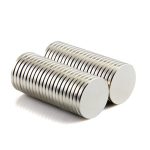
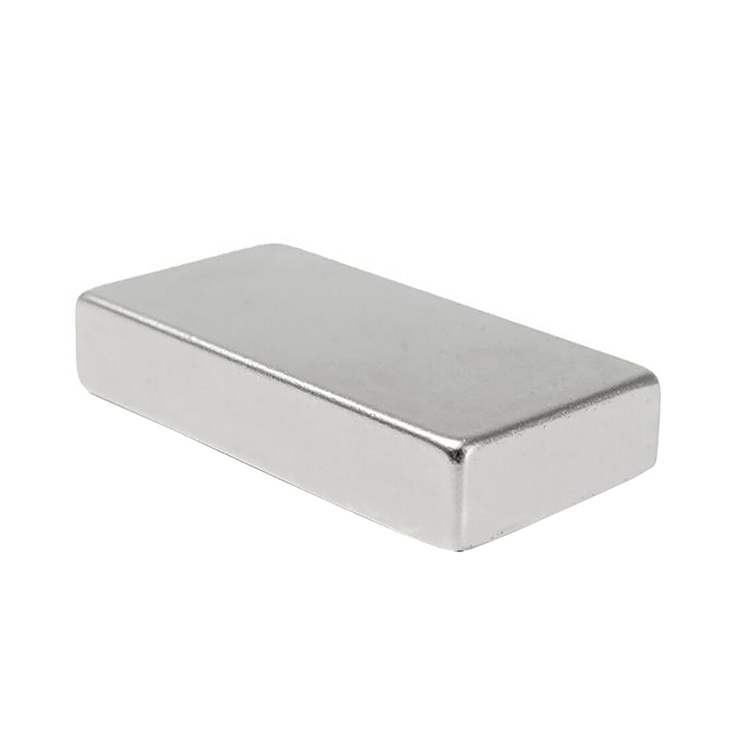
Permanent Magnet Material
Permanent magnetic couplings are a new type of coupling that connects the prime mover and the working machine through the magnetic force of permanent magnets.
It does not require direct mechanical connection, but uses the magnetic coupling between permanent magnets. The magnetic field can penetrate a certain spatial distance and the characteristics of the material to transfer mechanical energy.
The emergence of permanent magnet material magnetic couplings breaks the structural form of traditional couplings and adopts a new magnetic coupling principle to achieve force and torque transmission without direct contact between the driving shaft and the driven shaft, and can transform dynamic seals into static seals to achieve zero leakage. Therefore, it is widely used in sealed transmission machinery in chemical, electroplating, papermaking, pharmaceutical, food, vacuum and other industries.

Commonly used magnetic couplings
Common magnetic transmissions include synchronous transmission (planar and coaxial), hysteresis transmission and eddy current transmission. Due to their unique characteristics, they are used in different fields.
1. Planar magnetic coupling
Structure: permanent magnet materials are installed on two discs of the same diameter in a cross-poled manner. When in use, the two discs are installed on the driving shaft and the driven shaft respectively, leaving a certain air gap in between.
Principle: Since the N pole of magnet A attracts the S pole of magnet B on the opposite side and repels the N poles on both sides of magnet B, it is ensured that the driven shaft and the driving shaft keep rotating synchronously within a certain torque range.
Torque: This planar coupling has a simple structure and does not require high coaxiality of the two shafts during installation. Since it adopts the principle of plane attraction, the smaller the air gap, the greater the torque. In addition, since the transmitted torque is proportional to the disc area, the torque of this magnetic coupling cannot be too large, otherwise it will cause the size to be too large and difficult to install.

2. Coaxial magnetic coupling
Coaxial magnetic coupling is the most widely used synchronous transmission at present, and its typical application is magnetic pump.
Structure: Coaxial magnetic coupling consists of outer rotor, inner rotor, isolation sleeve and bearing system. Magnets are installed on the outer circumference of inner rotor and the inner circumference of outer rotor. The magnets have even poles and are arranged in a circumferential manner in NS cross. Align the working surfaces of the permanent magnet materials of the inner and outer rotors, that is, automatic coupling.

The inner and outer diameters of permanent magnet material magnetic couplings can generally be customized, and purchasers can choose the appropriate manufacturer to order according to their needs. The permanent magnet materials are generally made of samarium cobalt or neodymium iron boron permanent magnets, and the specific grades need to be determined according to the working temperature, working environment and coupling torque. The outer shell is generally made of stainless steel (Q235A, 304/316L).
Magnetic couplings are devices that use magnetic fields to transmit torque and rotational motion through a barrier, such as a wall or enclosure, without direct mechanical contact. They are used in various applications where it is desirable to isolate the driving and driven components from each other physically, typically for reasons like preventing leakage of fluids or maintaining sterile environments.
Here are some key aspects and applications of magnetic couplings:
Working Principle: Magnetic couplings typically consist of two sets of magnets, one on the driving side and one on the driven side, separated by a non-magnetic barrier (often a wall or housing). When the driving magnets rotate, they induce a magnetic field that interacts with the driven permanent magnet materials through the barrier, transmitting torque.
المزايا:
Leakage Prevention: permanent magnet materials are commonly used in pumps and fluid systems where maintaining a hermetic seal is critical to prevent leaks.
Maintenance Reduction: Since there is no direct contact between the driving and driven components, wear and tear are minimized, leading to longer lifetimes and reduced maintenance.
Sterile Environments: Magnetic couplings are ideal in applications requiring sterility, such as in pharmaceutical or food processing industries, where direct contact could lead to contamination.
Materials and Construction: Magnetic couplings are typically made from materials that do not interfere with magnetic fields, such as stainless steel or non-magnetic alloys. The magnets used are often rare earth permanent magnet materials like neodymium or samarium cobalt, chosen for their strong magnetic properties.
Design Considerations:
Torque Transmission: The design must ensure sufficient magnetic coupling strength to transmit the required torque between the driving and driven components.
Temperature Stability: Magnetic properties can be sensitive to temperature changes, so designs often incorporate materials and configurations that maintain magnetic strength over a range of temperatures. Alignment: Proper alignment of the magnets is crucial to ensure efficient torque transmission and minimize losses.
التطبيقات:
Pumps and Compressors: Magnetic couplings are used in pumps and compressors to drive shafts through sealed enclosures without allowing fluid leakage.
Mixers and Stirrers: In chemical processing and laboratories, magnetic couplings are used to drive mixers and stirrers without introducing contamination.
Medical Equipment: Magnetic couplings can be found in medical devices where isolation of electronic components or moving parts is necessary.
Automotive: In electric vehicles, magnetic couplings can be used to transmit torque from the motor to the wheels without a direct mechanical connection, contributing to efficiency and safety.
Overall, magnetic couplings offer a reliable and efficient solution for applications requiring torque transmission across a sealed barrier, maintaining operational integrity and reducing maintenance needs.
Permanent magnet materials are materials that retain their magnetization once magnetized and do not require an external magnetic field to maintain their magnetic properties. They are widely used in various applications such as electric motors, generators, magnetic sensors, magnetic recording media, and magnetic separation equipment.
Magnetic couplings are devices used to transmit torque and rotational motion from one shaft to another without physical contact, using magnetic fields. They consist of two sets of magnets: one set on the driving side (input shaft) and another on the driven side (output shaft), separated by a non-magnetic barrier (typically a wall or casing). When the driving magnets rotate, they create a magnetic field that induces a corresponding rotation in the driven magnets on the other side of the barrier, thus transferring torque across the gap.
Components of Magnetic Couplings:
Driving Side (Input Shaft):
Contains permanent magnet material that generate a magnetic field when rotated by an external source (such as an electric motor).
Typically enclosed in a housing made of non-magnetic material (e.g., stainless steel) to contain the magnetic field and provide structural support.
Driven Side (Output Shaft):
Also contains permanent magnets that interact with the magnetic field generated by the driving permanent magnet material.
Enclosed in a similar non-magnetic housing to maintain isolation and transmit torque to the output shaft.
Non-Magnetic Barrier:
Separates the driving and driven sides to prevent physical contact while allowing torque transmission through magnetic induction.
Often designed to be leak-proof in applications where the coupling is used in fluid systems to prevent contamination or leakage.
مبدأ العمل:
Magnetic Induction: When the driving magnets on the input shaft rotate, they create a magnetic field that permeates through the non-magnetic barrier to reach the driven magnets on the output shaft.
Torque Transmission: The magnetic field induces a torque in the driven magnets, causing them to rotate synchronously with the driving magnets. This torque transmission occurs without direct mechanical contact between the shafts, reducing wear and maintenance.
Applications of Magnetic Couplings:
Pumps and Compressors: Used in fluid handling systems to seal the rotating shaft from the pumped fluid, preventing leaks and contamination.
Mixers and Stirrers: Employed in chemical processing and laboratory equipment where sterile environments are essential.
Medical Devices: Used in MRI machines and other medical equipment where isolation and precision are critical.
Automotive: In electric vehicles and hybrid vehicles, magnetic couplings can transmit torque from the motor to the wheels efficiently and safely.
المزايا:
Leak Prevention: Magnetic couplings are ideal for applications requiring a hermetic seal, as they eliminate the need for traditional mechanical seals that can wear out and leak over time.
Maintenance Reduction: Because there is no direct contact between the shafts, there is minimal wear, resulting in longer operational life and reduced maintenance costs.
Efficiency: They offer efficient torque transmission permanent magnet material with minimal energy loss compared to friction-based mechanical couplings permanent magnet material.
In summary, magnetic couplings provide a reliable and efficient method for transmitting torque across sealed barriers in various industrial and scientific applications, offering benefits such as enhanced reliability, reduced maintenance, and improved operational safety.
Using magnetic couplings involves several considerations depending on the specific application and type of coupling used. Here’s a general overview of how magnetic couplings are typically used and installed:
Installation Steps:
Select the Correct Coupling Type:
Choose a magnetic coupling suitable for your application based on factors such as torque requirements, operating environment (temperature, pressure), and the medium being transmitted (fluid, gas, etc.).
Prepare the Driving and Driven Components:
Ensure that the driving and driven components (shafts) are properly aligned and prepared for installation. This may involve checking shaft dimensions, surface condition, and ensuring that both shafts are securely mounted in their respective housings or supports permanent magnet material.
Install the Driving Side (Input Shaft):
Mount the driving side of the magnetic coupling onto the input shaft. The driving side typically contains permanent magnets and is enclosed in a housing made of non-magnetic material (e.g., stainless steel).
Install the Driven Side (Output Shaft):
Mount the driven side of the magnetic coupling onto the output shaft. This side also contains permanent magnets and is enclosed in a similar non-magnetic housing. Ensure proper permanent magnet material alignment with the driving side to facilitate efficient torque transmission.
Position the Non-Magnetic Barrier:
Place the non-magnetic barrier (such as a wall or casing) between the driving and driven sides of the coupling. This barrier prevents direct physical contact between the magnets while allowing the magnetic field to transmit torque through induction.
Align and Secure the Coupling:
Align the driving and driven sides of the coupling to ensure optimal magnetic coupling strength and efficiency. Securely fasten both sides to their respective shafts and housings to prevent movement permanent magnet material or misalignment during operation.
Test and Adjust (if necessary):
Before putting the magnetic coupling into full operation, perform tests to ensure proper alignment, torque transmission, and smooth operation. If adjustments are needed permanent magnet material, make them carefully to optimize performance and minimize any potential issues.
Operating Considerations:
Monitoring: Regularly monitor the magnetic coupling during operation to ensure that it is functioning correctly and efficiently. Check for any signs of wear, misalignment, or loss of magnetic strength.
Maintenance: Magnetic couplings generally require minimal maintenance compared to mechanical couplings. However, periodic inspection and cleaning may be necessary to maintain optimal performance permanent magnet material, especially in environments prone to contamination or temperature fluctuations.
Safety: Follow safety protocols and guidelines specific to your application, especially in industries where precise torque transmission and operational reliability are critical (e.g., chemical processing, medical equipment).
Application-Specific Tips:
Fluid Systems: In pumps and compressors, ensure that the magnetic coupling is capable of withstanding the pressure and temperature conditions of the fluid being handled. Proper sealing and alignment are crucial to prevent leaks and ensure efficient operation.
Laboratory Equipment: For mixers and stirrers, choose a magnetic coupling that provides sufficient torque transmission for the intended mixing or stirring tasks. Ensure that the coupling permanent magnet material can operate in sterile environments without introducing contamination.
By following these steps and considerations, you can effectively install and use magnetic couplings in various applications, ensuring reliable torque transmission and operational efficiency while minimizing maintenance requirements.